
The Art and Practice of Spiritual Herbalism Apprenticeship
Online Herbal Education Program
The Art and Practice of Spiritual Herbalism
Level I & II Apprenticeship with Master Herbalist, Karen M. Rose
The Art and Practice of Spiritual Herbalism program is life-changing. As an apprentice, you will spend one to two years under the mentorship of Empress Karen M. Rose and team of experienced teachers and mentors. During this time, your relationship with plants and Spirit will expand as you step into your journey as a medicine person. The medicine of your plant allies will nourish, support, and replenish you through life changes during this initiatory period and beyond.
Start your journey with Levels 1 and 2. Upon successful completion of these Levels, you are invited to join Level 3.
Course Overview
Level 1 (12 Weeks) – 100 Hours
- Foundations of Plant Medicine
- Plant Actions
- Herbal Terminology
- Beginner Medicine Making
- Eight (8) Body Systems and Related Herbs
- Respiratory System, Immune System, Digestive System, Nervous System, The Skin, Sexual Health, The Liver, Circulatory System
- 23 Individual Plants through an in-depth study of Material Medica
- Energetics and Astrological and Spiritual Correspondences and Uses
- Contraindications and Safety
- Indigenous and Historical Uses
Investment
$6800 USD (9 Month Payment Plan Available) – INCLUDES LEVEL 1 & 2

Level 2 (14 Weeks) -150 Hours
- Introduction to Indigenous and Traditional Healing Approaches
- Curanderismo
- African Ritual and Healing
- Native American Herbalism
- Introduction to Chinese Principle
- Introduction to Ayurveda
- Astrological Herbalism
- 18 Individual Plants through in-depth study of Materia Medica with Energetics and Astrological Spiritual uses
- Herbal Client Case StudieS
- Intermediate Medicine Making
- Tea Formulation
- Herbal Medicine Dosage and Safety
Total Duration of the Program: Approximately One(1) Year. There will be 26 Class Meetings Spread out over a 12 Month Period.
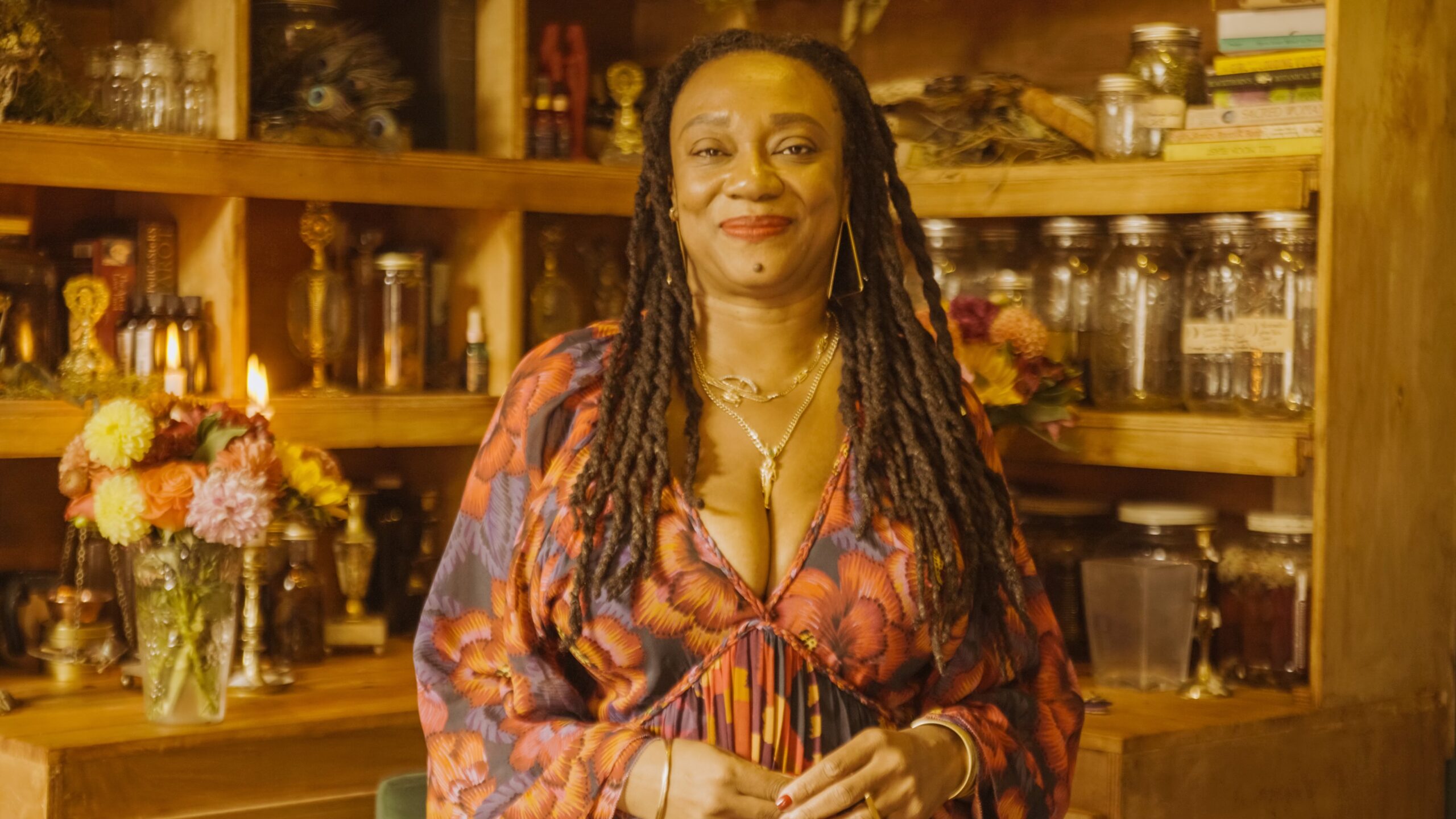
The mastery you gain from this experience will heal you and your family and extend your reach into your communities. What sets the Sacred Vibes Apprenticeship program apart from others is that you will graduate as an herbal entrepreneur with a brand and a medicinal herbal line. Empress Karen Rose’s journey has encompassed all aspects of an herbalism business as the owner of the brick-and-mortar Sacred Vibes Apothecary, an herbal education program, and an author. Under her tutelage, your growth as an herbalist is the focus.
We are clear that you cannot heal in a vacuum, and one of the strengths of our program is our active community. Sacred Vibes’ herbal community comprises over 1000+ supportive and richly diverse herbalists from all backgrounds. This community works diligently to create a safe space while uplifting all identities.

Important Details
LEVEL ONE & TWO (250 hours)
- Duration: 12 months
- Schedule: Weekly class meetings on the same night each week, 6-9 pm Eastern
- Location: ONLINE
- Investment: $7000
Fall 2026
- Application Deadline: June 30, 2026, 11:59 PM ET
- Admission Notifications: July 5, 2026
- Deposit Due: August 15, 2026 ($1000)
Classes will meet weekly on Wednesday evenings 6-9PM ET.
Spiritual Herbalism Apprenticeship FAQ
What is an apprenticeship?
An Apprentice is someone who invests 10,000 hours or more. Participating in this apprenticeship program requires that you attend the three hours of class each week, plus additional time studying and learning outside of class time.
You won’t ever finish being an herbal student. The world of plant medicine is vast – you’ll continue to be introduced to new plants and new studies.
Consider how much time you can commit to this study. If this journey is for you, what are you willing to invest? Your dedication will reflect in your progress and growth.
How do you recommend we prepare for the initial class and journey?
People enter the apprenticeship program with different skill levels regarding herbalism and spiritual practices. Some arrive with no experience at all, while others have already been on their journey. As an apprentice, you will be building this material from bottom up. Even with advanced knowledge, Karen asks that you start with an open heart and mind as this program is extraordinarily unique offering a different experience from most traditional herbal programs.
What have graduates of the Apprenticeship done after completing the program?
The options are truly endless! Apprentices have opened their own apothecaries, begun practicing clinical herbalism, launched herbalism lines, teach and write about spiritual herbalism. Individuals have incorporated these teachings into their other practices, such as; acupuncture, MD/DO physician practice, massage therapy, nursing, social work, clinical therapy and other wellness practices.
What are the apprenticeship class logistics?
Classes meet virtually once a week for three-hours. There are periods with breaks depending on the time of year you are enrolled; there is a summer and winter holiday break. Class times are set to Eastern Time, as the program is facilitated out of NYC. For students who may be in another country or time zone, there are no concessions for time.
What happens if I have to miss a class?
We understand that there are special circumstances that may require you to miss class but in the event that you do, you will be required to connect with a classmate to gather notes and review what was missed since classes are not recorded. To remain eligible for graduation, you must ensure your absences do not exceed three. Most classes have study group sessions outside of class to review materials and personal experiences with herbs and medicine.
Is this program neurodivergent friendly?
Yes, the program is neurodivergent friendly. Classes can be long and cover a wide range of material. We highly recommend preparing for class in advance to ensure the material covered is not overwhelming. We encourage breaks throughout the class as needed. This program is designed to be highly interactive and collaborative, it offers an opportunity to learn in a way that many find refreshing.
Will we have access to the program’s content outlines, or will it be more free-flowing, adjusting as we go?
A syllabus with the breakdown of classes will be provided ahead of the first class. Each level is approximately 12-14 weeks long. Please allow flexibility, as every class will differ depending on time constraints.
Are materials included with tuition?
Once we receive your signed payment agreement and deposit by the due date, we will share a list of needed supplies with all apprentices who commit to the program.
Apprentices will receive digital handouts covered in class and the materia medica to complete the details of each plant during class. For ease and organization, we recommend purchasing a Materia Medica Journal—a spiral-bound keepsake designed to help you organize your herbal studies throughout the apprenticeship program.
Its simple layout lets you structure your notes effectively, categorize herbs by body system, and include visual representations of each plant we explore.
Are classes recorded, and what support is available throughout the program?
Classes are not recorded, and attendance during live Zoom meetings are mandatory to respect student privacy and protect educational materials; violations of this policy may lead to expulsion from the apprenticeship program. To enhance learning, we encourage building community by connecting with your cohort about missed content, participating in mentor sessions for guidance, and engaging in reflective self-studying during scheduled breaks. Additionally, we recommend group study sessions outside of class to collaborate and review course materials effectively.
What can we expect during class?
Karen teaches in a non-traditional way. This is an indigenous spiritual training course, and often unlike anything that you are used to. Weekly classes are 3 hours long, and a lot of material is covered. There will be time for discussions, questions and responses throughout class.
Throughout Levels 1 and 2, you will engage in the in-depth study of key plants through materia medica, medicine making, wellness and anatomy, foundations of plant medicine through the lens of indigenous and ancestral healing, administering plant medicine safely, and case study practice.
You will leave level 2 with a new way of looking at and connecting with plants, and your relationship with them will adapt.
Is there homework or examination in this program?
While there is no traditional homework, you are expected to understand the material covered in class. Level 2 includes required reading and exercises before class. There are no quizzes, but you may encounter impromptu questions during sessions. There is a final examination at the end of Level 1, while Level 2 requires a project and presentation for graduation eligibility.
Financial Assistance
Are there payment plans available?
We offer a 9-month payment plan. If you are accepted into the program and require additional payment plan options, please notify the apprenticeship team, and we will discuss them further. You won’t ever finish being an herbal student.
Is there a scholarship for the apprenticeship? If so, how do I apply for the scholarship, and how much is it for?
Yes, there are scholarships available for the apprenticeship. For each cohort, we offer a limited number of scholarships, which are needs-based and a demonstration of interest in spiritual herbalism education. Eligibility requires prior participation in events or workshops hosted by Sacred Vibes Apothecary or our non-profit Sacred Vibes Community Healing Initiative (SVCHI). To apply, please indicate your need for financial support in the application and list the events or workshops you’ve attended.
Is there a refund policy if I have to leave the program for any reason?
All payments, including your enrollment deposit are strictly non-refundable. Payments that are made monthly cover your attendance. You will not be charged for future payments if you decide to leave the program mid-month. Payments made can be applied to future re-enrollment.
Additional Details
Will I need to travel to NYC to participate as an Apprentice?
No. The program is virtual, meaning you can attend class via Zoom from anywhere. You do not need to consider moving or traveling regularly to NYC. Should you decide to visit Sacred Vibes while visiting NYC, we welcome you, but this is not required.
What are some ways we can maintain a connection through distance?
Each cohort has its own way of forming its own bonds that are unique to its cohort and not managed by Sacred Vibes. For example, some cohorts do group text chats or a Whatsapp group to communicate with each other.
There is a Google group listserv that all apprentices become a part of and can communicate with the greater community of graduates and various mixed-level apprentices.
We encourage you to attend virtual and in-person community gatherings to remain connected to your cohort and the wider Sacred Vibes community.
Will we receive certification after completing levels 1 and 2?
No, we do not offer certification. Please keep in mind that in the US, herbalists are not licensed, and most herbal education programs do not provide official certification. To be considered a graduate of this program, you must complete Levels 1, 2 and 3. Graduated Level 3 Apprentices have completed 500+ hours of herbal study and receive a diploma that can be utilized toward your continued herbal journey and professional goals.
If you do not intend to see clients but to make medicine for yourself and your family, you can do so after completing levels 1 and 2 of the apprenticeship program.
Since Levels 1 and 2 are virtual, how do we go about Level 3? Is that only in NY? If so, is there a period of time we can come to participate in it?
Level 3 curiosity is always high at the beginning; however, you’ll learn about it when the time comes. You must complete the requirements of levels 1 and 2 in order to be invited to apply for level 3.
Level 3 is virtual, too, and you are not required to live in NY. Please note that you may have to come to NY to attend particular events for level 3, but it is not required to participate.
If accepted into Level 3, do you have to enroll in that same year if you aren’t ready?
No, you do not have to enroll once accepted. You can defer your acceptance. We recommend that you enroll within two years of completing Level 2.
When is the next enrollment period?
Enrollment occurs twice a year—in January and July. Our application process is on a rolling basis. If you apply today, you will be considered for the next open enrollment period. We will communicate with you and other applicants as we approach enrollment.
Can I participate in next year’s apprenticeship, or should I reapply then?
You will need to reapply for next year’s apprenticeship program.
What if I start the program and need to leave, can I pick up where I left off?
You must reapply for a new apprenticeship when you are ready to return. The Sacred Vibes Apprenticeship program is fluid and will change and adapt every year, and the syllabus will reflect those changes, which will require a new application.
Race & Spiritual Herbalism Apprenticeship Program
Is the Spiritual Herbalism Apprenticeship Program a BIPOC-Only Space?
No. The apprenticeship program is for all people regardless of gender and race identification. However, you are being taught by a Black Woman who centers indigenous and African Diaspora spirituality.
Our program covers herbs from all over the world. As with people, plants have traveled far and wide across the Earth. As detailed above, level 1 focuses on local and domestic herbs; however, we honor and recognize that some of these plants have been brought to North America by enslaved peoples, those who were colonized, as well as migrants and refugees. We respect this and teach this throughout the program, meaning that, like the plants, we are a program that accepts and invites all people.
I’ve heard there is anti-racism training for White identifying people. What does this involve?
We want all apprentices to enter the level 1 program on an equal footing as possible. One way consists in being aware of privilege.
To bring everyone to understand the principles of the program, we work with two graduated apprentices who specialize in anti-racism in the field of herbalism to provide space for training. We strongly recommend that non-POC complete this training. Details about these training sessions will be available as we get closer to enrollment.

Spiritual Herbalism Herb School © All Rights Reserved 2026